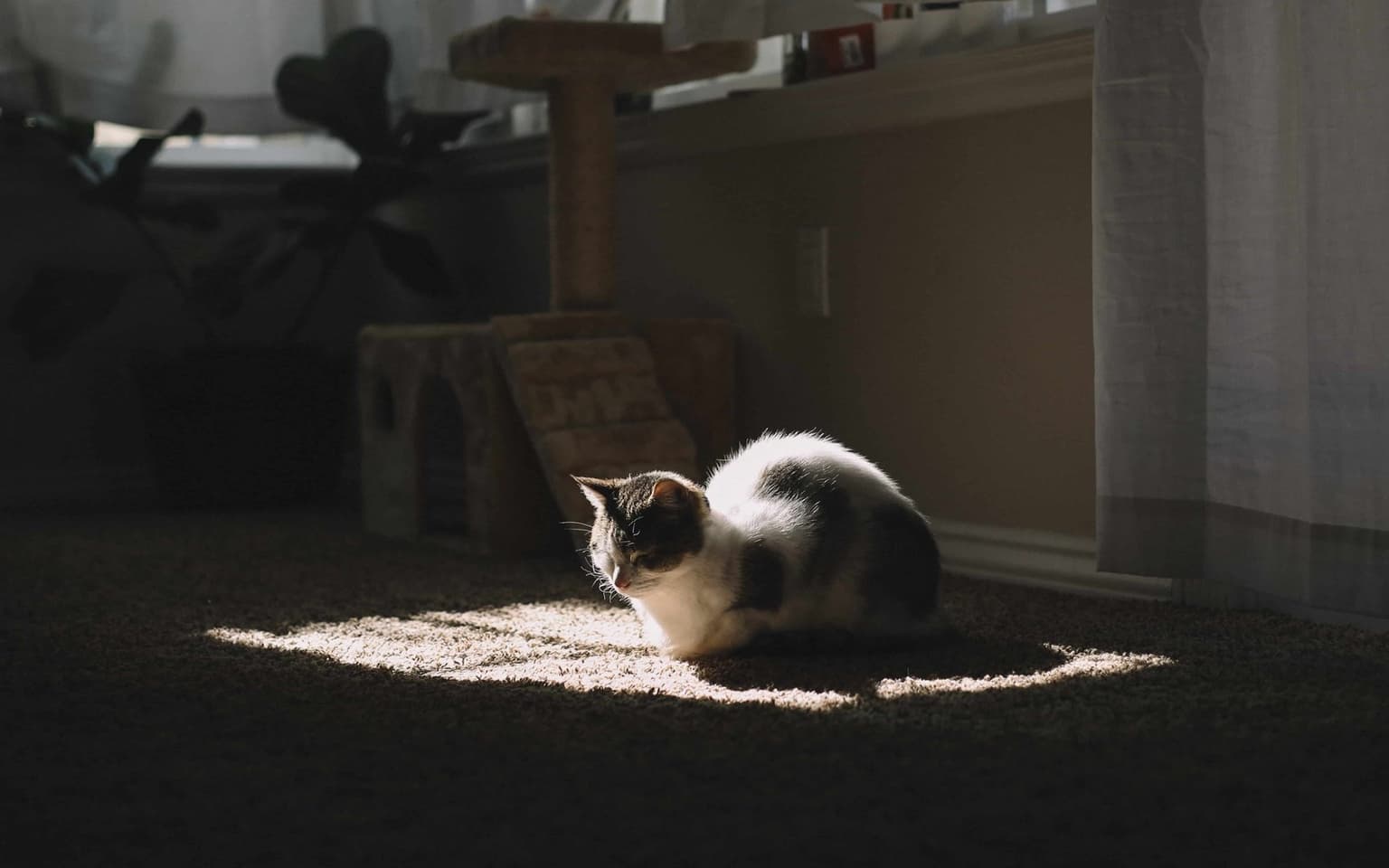
The smell has a schedule. That is the strange part, and it is usually what finally convinces a homeowner they are not losing their mind. For weeks the family room smells fine. Then a storm system rolls across North Texas, the sky goes gray over Garland for two days, and there it is again: that unmistakable ammonia-tinged note, hanging in the same corner of the room, as if the dog had an accident that morning. The sun comes out, the house airs out, the smell fades. Everyone forgets about it until the next front moves through.
A smell that keeps a weather diary is telling you something specific. Random odors do not correlate with the barometer. This one does, and once you understand why, you can trace it, find it, and end it. Consider this the case file.
The first clue: what the pattern rules out
Start with what the weather correlation eliminates. If the odor were coming from something on the surface of the carpet, a recent accident, a dirty pet bed, a food spill, it would smell roughly the same every day and fade steadily as the source aged. A smell that cycles with humidity has to be coming from a reservoir that is chemically dormant when dry and chemically active when damp. Very few things in a house behave that way, and old pet urine is by far the most common of them.
It also tells you the original accident was probably never fully removed, even if it was cleaned at the time, even if the spot has looked perfect for months or years. Surface cleaning can be genuinely complete at the surface while leaving everything below it untouched. The weather pattern is your evidence that something survived, somewhere below the part of the carpet you can see and touch.
The chemistry that reads the forecast
Here is what is actually happening down there. Urine leaves the body as mostly water, urea, and uric acid. The water evaporates and the urea breaks down fairly quickly, which is why a well-cleaned fresh accident can genuinely stop smelling. Uric acid is the survivor. It does not dissolve in water to any useful degree, it binds to whatever it dried inside, and as it dries it forms microscopic salt crystals, urate salts, that can stay chemically intact for years. Detergent passes right over them. Water rinses around them. They wait.
What they are waiting for is water vapor. Urate crystals are hygroscopic, meaning they actively pull moisture out of humid air the way the little silica packet in a shoebox does, except in reverse purpose. When a rainy stretch pushes indoor humidity up, the crystals absorb airborne moisture and partially re-dissolve, and that rehydration restarts the chemical breakdown that produces ammonia and sulfur-bearing gases. The crystals are, in effect, a scent machine with a humidity switch. Dry air, switch off. Rainy week, switch on. Your nose is detecting a chemical reaction being turned on and off by the weather, which is why the smell arrives with the front and leaves with it too.
The rain itself adds a second effect: humid air carries odor molecules to your nose more efficiently than dry air does, which is why everything, good and bad, smells stronger before a storm. The two effects stack. The reservoir produces more gas exactly when the air is best at delivering it.
Mapping the crime scene with a blacklight
Knowing why the smell cycles does not tell you where it lives, and this is where most homeowners are working blind, because the reservoir frequently is not where they think. Dogs favor spots along walls and under furniture; cats favor corners and drapes; and liquid travels once it is in the pad, wicking sideways and downhill, so the epicenter of the smell can be a couple of feet from any spot you ever saw.
A UV flashlight, sold cheaply online as a pet urine detector, turns the search from guesswork into a map. The dried compounds in urine fluoresce a pale yellow-green under ultraviolet light. To run the audit properly, wait for full dark, turn off every light in the room, and hold the flashlight low, at a shallow angle a foot or two off the carpet, sweeping slowly. The shallow angle matters; shining it straight down washes out the glow. Mark anything that fluoresces with painter's tape. Expect surprises. Nearly everyone who does this finds more marks than they had accidents they knew about, and the pattern of splotches, especially any large irregular blob, shows you where liquid spread through the pad far beyond the original event. Not everything that glows is urine, since some detergents and spilled drinks fluoresce too, but a glowing patch in the same zone as your weather-cycling smell is as close to a confession as a carpet gives.
Why the spray bottle keeps losing
With the reservoir mapped, the last question is weaponry, and this is where the store aisle misleads people. Products fall into two camps. Fragrance-based sprays and powders add a competing smell on top of the problem; the perfume evaporates in days, the crystals underneath do not, and the next rainy week the cycle resumes on schedule. Enzyme-based cleaners are the honest chemistry, because enzymes actually digest uric acid compounds and break the machine instead of masking its output.
But enzymes have a hard physical limit: they only digest what they touch. A consumer spray bottle wets the top half-inch of pile. The crystals your blacklight just mapped are sitting in the backing, in the pad, sometimes in the subfloor, deposited there by a liquid that had gravity on its side and hours to travel. Chemistry cannot fix a geometry problem. This is the whole reason a spot can be treated six times with a good enzyme product and still smell every time it rains: each treatment genuinely destroyed the crystals in the top layer and never met the colony below.
Reaching the full depth of the deposit is what a professional odor and stain removal treatment is for. We trace the true footprint of the damage, treat through the fiber into the backing and pad where the crystal reservoir actually lives, and break the uric acid down at every depth it reached. Because our process is low-moisture and dries in about an hour, the treatment does not soak the pad and hand the humidity problem a new water source on its way out.
Case closed means the forecast loses its hold on your family room: the next gray week over Garland brings rain and nothing else. If your carpet has a smell that checks the weather, call Safe-Dry® Carpet Cleaning of Garland at 469-596-7201 and we will shut the machine off at the source.