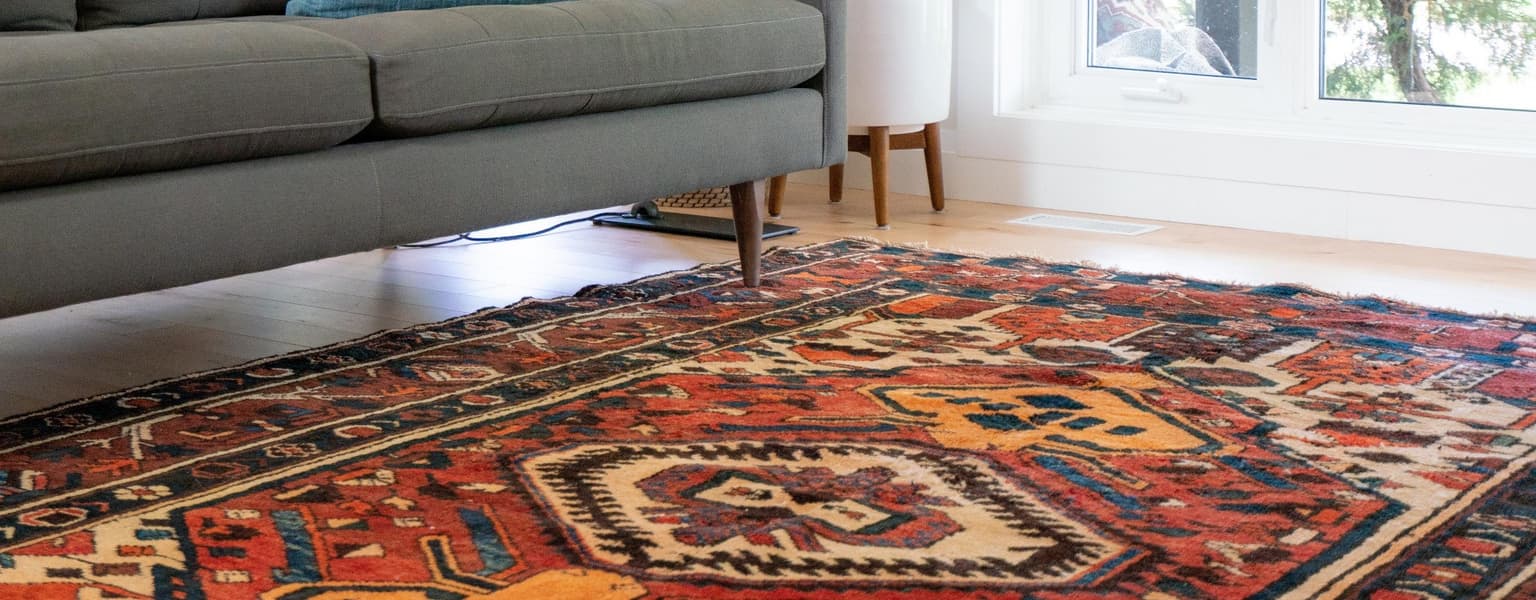
The first ten minutes of an Oriental rug job involve no cleaning at all. The technician is on one knee, turning back a corner to study the knots from behind, rubbing a white cloth against a damp test spot in a hidden margin, checking whether the fringe is an extension of the foundation or a sewn-on afterthought. To someone watching from the kitchen it can look like stalling. It is actually the entire discipline of the trade compressed into a short ritual, because with hand-knotted rugs the damage is done by the cleaner who assumed instead of the cleaner who checked.
Safe-Dry® Carpet Cleaning of Garland has that ritual built into every Oriental and Persian rug appointment. The brand has spent close to three decades on delicate textiles, and the method we bring, low-moisture carbonation with zero soap, exists precisely because these rugs punish the standard alternatives. Flooding a vegetable-dyed wool rug with hot detergent water is how heirlooms become insurance claims. We never immerse a rug, we never guess about a dye, and we clean the piece right where it lives in your home.
The inspection that happens before anything else
Here is what that opening inspection is establishing, and why each answer changes the plan.
Fiber comes first. Wool behaves like wool, forgiving of gentle agitation, intolerant of heat and soak. Silk demands a lighter hand at every stage. Cotton foundations hold water far longer than the pile above them, which is a hidden rot risk if a cleaner wets the rug through. Viscose masquerades as silk until it gets wet, then mats and yellows. A five-second burn-test guess is not good enough, so the technician confirms what the rug is made of before selecting a single product.
Construction is next. Hand-knotted, hand-tufted with a latex backing, or machine-loomed, each carries different tolerances. A tufted rug's glue layer can fail if it is overwet. A genuine hand-knotted piece can handle careful work almost indefinitely, which is why some of the rugs we see in the established homes around Club Hill Estates have been on floors for fifty years and counting.
Dyes get the most suspicion of all. Natural dyes, indigo, madder, pomegranate rind, are part of what makes an older rug valuable, and they are also the most eager to run. The colorfastness test happens in an out-of-sight spot on every single job, no exceptions, even on a rug we cleaned two years ago. If a dye reads unstable, the plan changes on the spot: drier techniques, cooler solutions, more conservative goals, all discussed with you before we proceed.
The cleaning itself
The heaviest lifting in Oriental rug care is dry. Years of fine grit sift down through the pile and pack into the foundation, and that grit saws at the knots underfoot long before it shows on the surface. So before moisture enters the picture, the rug gets a thorough dusting and dry extraction to pull that abrasive load out. On a rug that has gone five or ten years between cleanings, this stage alone produces a visible change.
Then the wet work, such as it is. A wool-safe, hypoallergenic pre-treatment addresses traffic lanes and spots. Pet accidents get enzyme formulas that dismantle the organic residue at its source. The carbonating solution lifts the remaining soil using roughly a tenth of the water a steam machine would apply, extraction draws it back out almost immediately, and the pile is groomed to lie in its natural direction. No soap touches the rug at any point, so no residue remains to stiffen the hand of the wool or attract early resoiling, and the piece stays clean up to four times longer than a detergent wash would leave it. Drying takes about an hour, beating a hot water job by a factor of as much as eight, and for a rug with a cotton foundation that speed is less a convenience and more a safety margin.
Fringe gets its own moment of care, since it is usually the first casualty of careless cleaning. On a hand-knotted piece the fringe is the exposed end of the foundation itself, the warp threads the entire rug is tied onto, so it is cleaned by hand, gently, and never fed under rotating equipment. Tangled or gray fringe brightening back to cream is one of the small satisfactions of the trade.
You approve one written price before the work starts, the technicians handling your rug are certified and insured, and a 100% satisfaction guarantee covers the result. Households with children and animals do not need to clear out; every solution we use is non-toxic and made for homes where the rug is furniture, not museum stock.
Why these rugs deserve the caution
A machine-made rug is a purchase. A hand-knotted rug is usually a story: the trip it came home from, the relative who owned it first, the dining room it has anchored through three houses. In Garland we clean pieces like this in Buckingham-area homes where the rug predates the subdivision. The financial value is real, but the irreplaceability is the point. A ruined heirloom cannot be reordered.
The Texas climate adds its own pressures. Humid summer months invite mildew into any rug that stays damp too long, which is one more argument for a method that dries within the hour, and the wool-moth risk that comes with long storage means a rug is generally healthier on the floor, in use and regularly cleaned, than rolled up in a closet for a decade.
The maintenance case is quietly strong too. Cedar and ragweed pollen settle into the pile in season, dust and dander accumulate year-round, and foot traffic packs all of it deeper, dulling colors from the inside. A rug cleaned on a sensible cycle keeps its color depth and its structure, and it filters your room's air instead of re-releasing what it caught. Owners who also have wall-to-wall carpet or fabric furniture often handle everything in one visit through our carpet cleaning and upholstery cleaning services, and our area rug cleaning page covers the machine-made pieces in the rest of the house.
Common questions
Is the process safe for wool and silk? Yes, and it was chosen for exactly that reason. Low moisture, no heat shock, no soap, wool-safe products throughout, and a dye test before anything begins. The failure modes that ruin natural-fiber rugs are the ones this method was designed to avoid.
Do you take the rug away? No. Cleaning happens in your home, and we never immerse a rug in a wash tank. If a piece has damage or contamination beyond what in-home work can responsibly address, we tell you that at the inspection and talk through the options.
What about old pet stains on a valuable rug? Enzyme treatments handle most of them, applied carefully and matched to the fiber and dye situation. Heavy or repeated contamination may bring our odor and stain removal process into the visit for a deeper result.
What is the right cleaning interval for a hand-knotted rug? Somewhere between one year and eighteen months for typical use, shorter when pets or heavy traffic are in the picture. Stretching the interval mostly means extra years of grit grinding at the foundation between visits.
Arrange an inspection and cleaning
Call 469-596-7201 or book online, whichever hour it happens to be; scheduling runs around the clock. We serve Garland along with Mesquite, Rowlett, Sachse, Wylie, Murphy, and Rockwall, mapped out on our service areas page. Current offers live on the coupons page.